Low water pressure on a well is frustrating because nothing seems broken. The pump runs, water comes out, but the shower is weak and the taps are slow. The cause is somewhere between the well and the faucet, and the gauge on the pressure tank is where finding it starts.
Water Well Repair Near Me is an independent referral service, not a well contractor, pump installer or plumber. When you send the form, your request goes to this site’s operator, who passes it to an independent local well pro who can contact you and prepare a quote for the work.
Start at the gauge
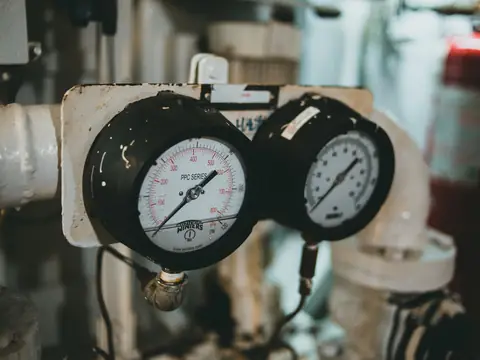
The gauge on or near the pressure tank shows the pressure in the system. Read it with no water running, then open a tap and watch. Note the reading when the pump starts and when it stops. Those numbers, and how the needle moves, tell a pro which part to look at first.
| What the gauge does | Where it points |
|---|---|
| Reads normally at the tank, but one tap is weak | That tap, its aerator or the pipe to it |
| Low at the tank and the pump stops early | The pressure switch setting or the switch itself |
| Drops fast and the pump clicks on and off | A waterlogged pressure tank |
| Climbs slowly and the pump runs a long time | A worn pump, a leak, or a well running low |
| Normal at the tank, low all over the house | A clogged filter or treatment unit, or scale and sediment in the lines |

Where the pressure goes
The pressure switch
The switch decides when the pump starts and stops. If it is set low, or its contacts are worn, the system never builds the pressure it should. Adjusting a switch means working inside a live electrical box, so it is a job for the pro.
The pressure tank
A tank that has lost its air charge cannot hold water under pressure, so pressure falls quickly and swings as the pump starts and stops. The well pressure tank replacement page explains how a pro tells whether it can be recharged.
The pump
A worn pump may still run but deliver less water than it used to. The pump may also struggle if the well’s water level has dropped. See well pump repair and, if the pump is done, well pump replacement.
Filters, treatment units and lines
A sediment filter or a treatment unit that has not been serviced can choke the flow to the whole house. TCEQ advises following the maker’s maintenance recommendations, which may include changing filters, or the unit can lose its effectiveness. Scale and sediment in the pipes can slow flow too. EPA’s chart ties scaly residue to hardness and stained fixtures to iron, copper and manganese, which a well water test can measure.
A leak
A leak in the line between the well and the house, or in the drop pipe down the well, can make the pump run longer while pressure stays low. Wet ground on the line’s route, or a pump that runs with no taps open, are signs to mention.
Pressure weak or surging? Say what the gauge does and give your ZIP code.
When the well itself is running low
Sometimes the system is fine and the well cannot keep up. Pressure that is good in the morning and fades during heavy use, sputtering taps, or air in the water can point to a water level that is dropping. That is a different problem from equipment failure, and the guide to a dry well covers it.


What to tell the pro
- Your gauge readings: at rest, when the pump starts and when it stops
- Whether the trouble is at one tap or the whole house
- Whether it came on suddenly or slowly
- Any filters or treatment units on the system and when they were last serviced
- Whether the pump clicks on and off, or runs a long time
If a part is replaced to fix the pressure, test the water afterward: EPA says to test immediately if you replace or repair any part of the well system.
Send what the well is doing and your ZIP code. An independent local well pro can contact you.
Questions people ask
Why is my well water pressure suddenly low?
A sudden drop points to something that changed: a failed switch, a tank that lost its air, a clogged filter, a leak or the pump. Read the gauge and send what it does.
Can I turn up the pressure switch myself?
The switch is live electrical equipment, and the tank’s air charge is set to suit the switch. Leave adjustments to the pro.
Why is pressure low at only one tap?
If the gauge reads normally at the tank, the cause is likely that tap, its aerator or the pipe to it rather than the well system.

What is your well doing?