No water at the taps, a pump that hums and trips the breaker, or one that runs and never shuts off: well pump repair starts with finding which part of the system has failed. The pump is only one of them, and the parts at the surface are checked first.
Water Well Repair Near Me is an independent referral service, not a well contractor, pump installer or plumber. When you send the form, your request goes to this site’s operator, who passes it to an independent local well pro who can contact you and prepare a quote for the work.
How a well pump system fits together
Every private well that supplies a house under pressure has the same few parts working as a team. Knowing them makes it easier to describe what you see, and easier to follow what the pro tells you.
- The pump lifts water out of the well. It is either down the well, hanging on its pipe, or above ground near the well or in the house.
- The pressure switch turns the pump on when the pressure in the system drops to a set point and off when it reaches a higher one.
- The pressure tank holds water under pressure, so the pump does not have to start every time a tap opens.
- The pressure gauge on or near the tank shows what the system is doing.
- The wiring, breaker and any control box carry power to the pump. A submersible pump may have a control box in the house.
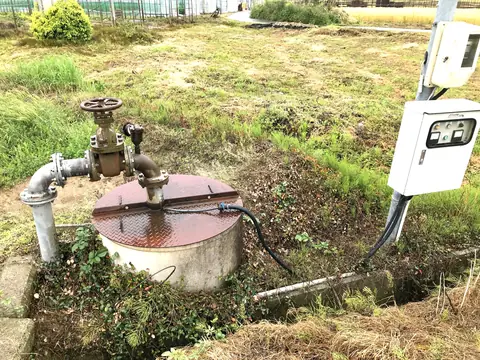
- The wellhead, the casing and the cap above ground, protects the top of the well and is where the pipe and wire go down.
When one part fails, the others can show it. A tank that has lost its air charge makes the pump start and stop over and over. A switch with burned contacts can leave the pump off with plenty of water down the well. That is why repair is a process of checking each part in turn rather than starting with the pump.

Signs the pump or its controls need a pro
These are the symptoms people describe when they send a request about well pump repair. Several can come from more than one part, so treat them as a starting point, not a verdict.
| What you notice | Parts a pro may look at first |
|---|---|
| No water at any tap | Breaker and power, pressure switch, control box, then the pump and the well |
| Pump runs and will not shut off | Pressure switch, a leak in the line, the pump’s output, the water level in the well |
| Pump clicks on and off over and over | Pressure tank air charge or bladder, pressure switch |
| Breaker trips when the pump starts | Wiring, control box, the pump motor |
| Pressure rises and falls at the tap | Pressure tank, switch, a partly blocked line or filter |
| Sputtering taps or air in the water | The water level in the well, the pump, the drop pipe |
| Sand or grit in the water | The pump, the well screen or the well itself |
If the pressure gauge reads zero and stays there while the pump has power, the pump is not delivering water to the tank. If the gauge climbs and the pump keeps running, the switch may not be cutting it off. Writing down what the gauge does when a tap runs is one of the most useful things you can give the pro.
Safe checks before you send the form
A well pump runs on household current. Stick to checks that need no tools and no open covers. Anything with exposed wiring is for the pro.
- Look at the breaker panel. If the breaker for the pump has tripped, note it. If it trips again after being reset, leave it off.
- Read the gauge on the pressure tank with no taps running, then again with a tap open.
- Listen near the tank or the control box. Note whether you hear a click, a hum or nothing at all.
- Check whether the trouble started after a storm, a power cut or work near the well.
- Walk to the wellhead and look at the cap and casing for damage, without opening anything.
Flooded well or pump
If water is standing around the wellhead or the pump, EPA’s advice is to stay away from the pump while it is flooded, to avoid electric shock, and not to drink or wash with the water. A well or pump contractor should clean and disinfect the well before the pump is turned back on.
Pump trouble now? Say what the well is doing and give your ZIP code.
Submersible or jet pump
The kind of pump you have changes what a repair involves. If you are not sure which you have, look for a pump near the pressure tank. If there is none in the house or pump house, it may be down the well.
| Submersible pump | Jet pump | |
|---|---|---|
| Where it sits | Down the well, on the drop pipe | Above ground, in the house, a basement or a pump house |
| Wells it suits | Drilled wells of greater depth | Shallower wells |
| What you can see | The wellhead, the wiring and any control box | The pump and motor themselves, beside the tank |
| Getting at it | The pump is pulled up on its pipe | Reached where it stands |
A jet pump can be inspected where it stands. A submersible pump is out of sight, so the pro tests what they can from the surface, such as power at the wellhead and how the motor behaves, before deciding whether to pull it. Pulling a submersible pump means lifting the pump, pipe and wire out of the casing, which is work for a pump contractor with the right equipment.
What well pump repair involves
Every pro has their own routine, but the order is top down, because the parts at the surface are easier to reach and test. A visit for pump trouble may include:
- Asking what happened and when, and reading the gauge with you.
- Testing power at the breaker, the switch and, for a submersible pump, the control box or the wellhead.
- Checking the pressure switch and its contacts, and the setting it switches at.
- Checking the pressure tank’s air charge and looking for a waterlogged tank.
- Looking for leaks in the line between the well and the house.
- Testing the pump motor and, if the fault is down the well, pulling the pump to look at the pump, pipe, wire and check valve.
Some faults are fixed at the surface: a new pressure switch, a control box part, a wiring repair or a recharged or replaced pressure tank. If the pump itself has failed, the pro can tell you whether it can be repaired or should be replaced. When a pump has worn out, well pump replacement explains what happens next.


When the problem is not the pump
Some requests for well pump repair turn out to be something else. Three are worth knowing about before the visit:
- The pressure tank. A tank that has lost its air charge or has a failed bladder makes a healthy pump short cycle. The fix is at the tank: see well pressure tank replacement.
- Low pressure with no failure. Clogged lines, a blocked filter or a switch set low can make pressure weak while every part still works: see low water pressure from a well.
- Not enough water in the well. A pump that runs but brings up air or nothing may be in a well that has run low. The guide to a dry well covers the signs.
Licensing and who does the work
Well drilling and pump work is licensed by the state in many places, and your contractor should hold the license your state requires. Texas is one clear example: TDLR says a license is required to drill a water well and to install a pump for one, and it regulates private water well drilling and pump installation. Rules in other states differ, so ask the pro which license they hold and check it with your state.
The well itself is your responsibility. EPA says private wells are not regulated by the federal government under the Safe Drinking Water Act, nor by most states, so no utility will step in. Keep the paperwork from each repair: what was found, which parts were replaced and when.
Test the water after the repair
Any repair that opens the well is one of the times EPA says to test right away: test immediately if you replace or repair any part of the well system. CDC gives the same advice and asks owners to use a state-certified laboratory. A test for total coliform bacteria, nitrates, total dissolved solids and pH covers EPA’s yearly list. The well water testing page explains how.
If the water came out cloudy or sandy before the repair, mention it. EPA’s own table of reasons to test lists cloudy water (test for color and detergents) and rapid wear of treatment equipment (test for pH and corrosion), and the answer may change what the pro does at the pump or the well.
What to have ready for the pro
- What the well is doing and when it started
- The gauge readings you took, with and without a tap running
- Whether the breaker tripped, and whether it tripped again
- Where the wellhead, the pressure tank and any control box are
- Whether the pump is in the well or above ground, if you know
- Any records: when the well was drilled, its depth, past repairs and tests
Send what the well is doing and your ZIP code. An independent local well pro can contact you.
Questions people ask
Can a well pump be repaired instead of replaced?
The fault may be in a part that can be fixed or swapped at the surface, such as the pressure switch, a control box part or the wiring. A pump that has failed down the well may be repaired or replaced; the pro can say which once they have tested it.
Why does my well pump trip the breaker?
A failing motor, a fault in the wiring or the control box, or a pump that is struggling can all trip it. If the breaker trips again after a reset, leave it off and let a pro test the circuit.
Why does my well pump run but no water comes out?
The pump may not be delivering water because of a fault in the pump or pipe, a leak, or a low water level in the well. Note what the gauge reads and send the form.
What does well pump repair cost?
This site prints no prices. What affects the job includes where the pump sits, whether it has to be pulled, and which parts need replacing. The pro can prepare a quote once they know the job.
Does homeowners insurance cover well pump repair?
That depends on your policy and what caused the failure. Ask your insurer; this site cannot say what any policy covers.
Is this site a well pump company?
No. Water Well Repair Near Me is an independent referral service, not a well contractor, pump installer or plumber. This site’s operator passes your request to an independent local well pro, who can contact you.

What is your well doing?