Well water testing is the one job on a private well that EPA and CDC put on a calendar: at least once a year, and again whenever something changes. This page sets out what to test for, when to test sooner, how to use a certified lab and what to do with the results.
Water Well Repair Near Me is an independent referral service, not a well contractor, laboratory or water treatment company. When you send the form, your request goes to this site’s operator, who passes it to an independent local well pro who can contact you and prepare a quote for the work.
Why a private well needs testing at all
City water is tested by the utility. A private well is not. EPA states that private well owners are responsible for delivering safe drinking water to their households, and that private wells are not regulated by the federal government under the Safe Drinking Water Act, nor by most states. No utility tests it for you.
The reason to bother is in EPA’s own numbers. A U.S. Geological Survey study of 2,100 private wells found that water from about one in five contained at least one contaminant at a level above a human-health benchmark for drinking water. You cannot tell which group your well is in by looking at the water, smelling it or tasting it.
The yearly test: four things
EPA’s advice is to test your private well annually for total coliform bacteria, nitrates, total dissolved solids and pH. CDC gives the same list and says to test at least once each year. Nebraska’s DWEE suggests sampling around the same time each year, in the spring, and around the same time each year.
| Test | What it tells you |
|---|---|
| Total coliform bacteria | Whether bacteria are getting into the well. Nebraska DWEE says their presence suggests structural issues with the well or a source of contamination nearby. |
| Nitrates | Whether runoff from fertilizer, livestock areas or septic systems is reaching the water. EPA’s standard for nitrates in public water is 10 mg/L, and DWEE uses the same level as guidance for private wells. |
| Total dissolved solids | How much is dissolved in the water. EPA’s non-mandatory guideline is 500 mg/L, linked to deposits, staining and a salty taste. |
| pH | How acidic or basic the water is. EPA’s guideline range is 6.5 to 8.5. |
EPA also suggests you may want to test more often if small children or elderly adults live in the house, or if someone in the house is pregnant or nursing.

When to test right away
Do not wait for the yearly test if any of these apply. EPA says to test immediately when:
- There are known problems with ground water or drinking water in your area
- Conditions near your well have changed a lot: flooding, land disturbance, new construction or industry
- You replace or repair any part of your well system, including the pump or pressure tank
- You notice a change in the water’s odor, color or taste
CDC adds testing more often after problems nearby and after any repair to the well. That means a well pump repair, a pump replacement or a pressure tank replacement should be followed by a test.
Extra tests for your situation
The four yearly tests are a baseline. EPA publishes a chart of conditions and nearby activities with the tests to consider for each. Not every substance on it is a health concern; EPA notes that some affect only appearance, taste and odor.
| If you notice or live near | EPA suggests testing for |
|---|---|
| Intensive agriculture | Nitrate, nitrite, pesticides, coliform bacteria |
| Plumbing or service lines that contain lead | pH, lead, copper |
| Corrosion of pipes and plumbing | Corrosion, pH, lead |
| Radon in indoor air, or a radon rich region | Radon |
| Coal or other mining | Metals, pH, corrosion |
| Gas drilling | Chloride, sodium, barium, strontium |
| A dump, landfill, factory, gas station or dry cleaner | Volatile organic compounds, total dissolved solids, pH, sulfate, chloride, metals |
| An odor of gasoline or fuel oil | Volatile organic compounds |
| Objectionable taste or smell | Hydrogen sulfide, corrosion, metals |
| Stained plumbing fixtures or laundry | Iron, copper, manganese |
| Salty taste, seawater or a heavily salted road | Chloride, total dissolved solids, sodium |
| Scaly residue, soap that will not lather | Hardness |
| Cloudy, frothy or colored water | Color, detergents |
Your local health department can also tell you which substances are common in your area’s groundwater. EPA suggests asking them, and Florida’s Department of Health says local health departments may recommend extra tests depending on land use nearby.
Need a well checked or a test taken? Say what is going on and give your ZIP code.
Where to get well water tested
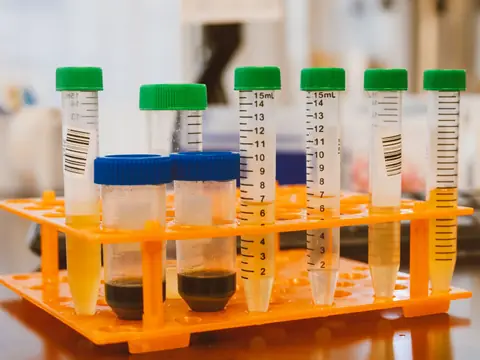
Use a certified laboratory. EPA says to use only laboratories certified to do drinking water testing, and CDC says to use a state-certified laboratory. A home test kit is not the certified lab test EPA and CDC describe.
- Your local or county health department. EPA notes it may provide private well testing for free. Florida’s Department of Health says county health departments can explain how to collect the samples yourself.
- A state-certified laboratory. Your state can give you a list of labs certified for drinking water.
- A well pro. Some well pros can take samples for a certified lab, or test as part of a well inspection. Ask which lab they use and whether it is certified.
Follow the lab’s instructions for taking the sample exactly. Use the bottle the lab provides and return it as soon as the lab asks.


Reading the results
EPA says your results should show the concentration of each substance tested, and may show whether it exceeds a national primary or secondary drinking water standard. Primary standards are about health. Secondary standards are non-mandatory guidelines for taste, color and odor, which EPA does not enforce.
| Substance | EPA secondary guideline | What EPA links it to |
|---|---|---|
| Iron | 0.3 mg/L | Rusty color, sediment, metallic taste, reddish or orange staining |
| Manganese | 0.05 mg/L | Black to brown color, black staining, bitter metallic taste |
| Chloride | 250 mg/L | Salty taste |
| Total dissolved solids | 500 mg/L | Hardness, deposits, colored water, staining, salty taste |
| pH | 6.5 to 8.5 | The guideline range; corrosion and rapid wear of equipment are reasons EPA gives to test pH |
If a test comes back positive
If a contaminant exceeds a health standard, EPA’s advice is to contact your public health department for the steps to follow and to have the well re-tested to confirm what was found and at what level.
- Coliform bacteria. Nebraska DWEE says water can be boiled for one minute in the short term before drinking or cooking, and that a certified well contractor should inspect the well as soon as possible. See coliform in well water.
- High nitrates. Do not boil the water. DWEE explains that boiling makes some water evaporate and concentrates the nitrates that remain.
- Iron, manganese or hardness. EPA treats iron and manganese under its non-mandatory secondary guidelines for taste, color and staining. Treatment is chosen for what the test found: see well water treatment.
Test before you buy treatment
A test result is what any treatment should be chosen against. Texas’s TCEQ starts its guide to home water treatment with one question: what contaminant do you want to remove or reduce?
Keep the results
File every lab report with the date. Year by year, they show whether anything is changing. They also help a well pro looking at a new problem, and they help when a house with a well is sold.
Send what is going on with the well and your ZIP code. An independent local well pro can contact you.
Questions people ask
How often should well water be tested?
EPA and CDC say at least once a year for total coliform bacteria, nitrates, total dissolved solids and pH, and right away after any repair to the well, a flood or a change in taste, color or smell.
Where do you take well water to be tested?
To a laboratory certified for drinking water testing. Ask your local or county health department first: EPA notes it may provide private well testing for free.
Does a store test well water for free?
This site cannot speak for any store. EPA and CDC both say to use a certified laboratory, and a test is only that if a certified laboratory does it.
Why does my well water taste metallic?
EPA links a metallic taste to iron and a bitter metallic taste to manganese. Its chart suggests testing for iron, copper and manganese when fixtures stain, and for hydrogen sulfide, corrosion and metals when water tastes or smells off.
Is my well water safe to drink?
Only a test can say. EPA notes that a USGS study found about one in five private wells had at least one contaminant above a health benchmark, which is why it advises testing every year.
Can a well pro test my water?
Some well pros take samples for a certified lab or include testing in an inspection. Ask which lab they use when they contact you.

What is your well doing?